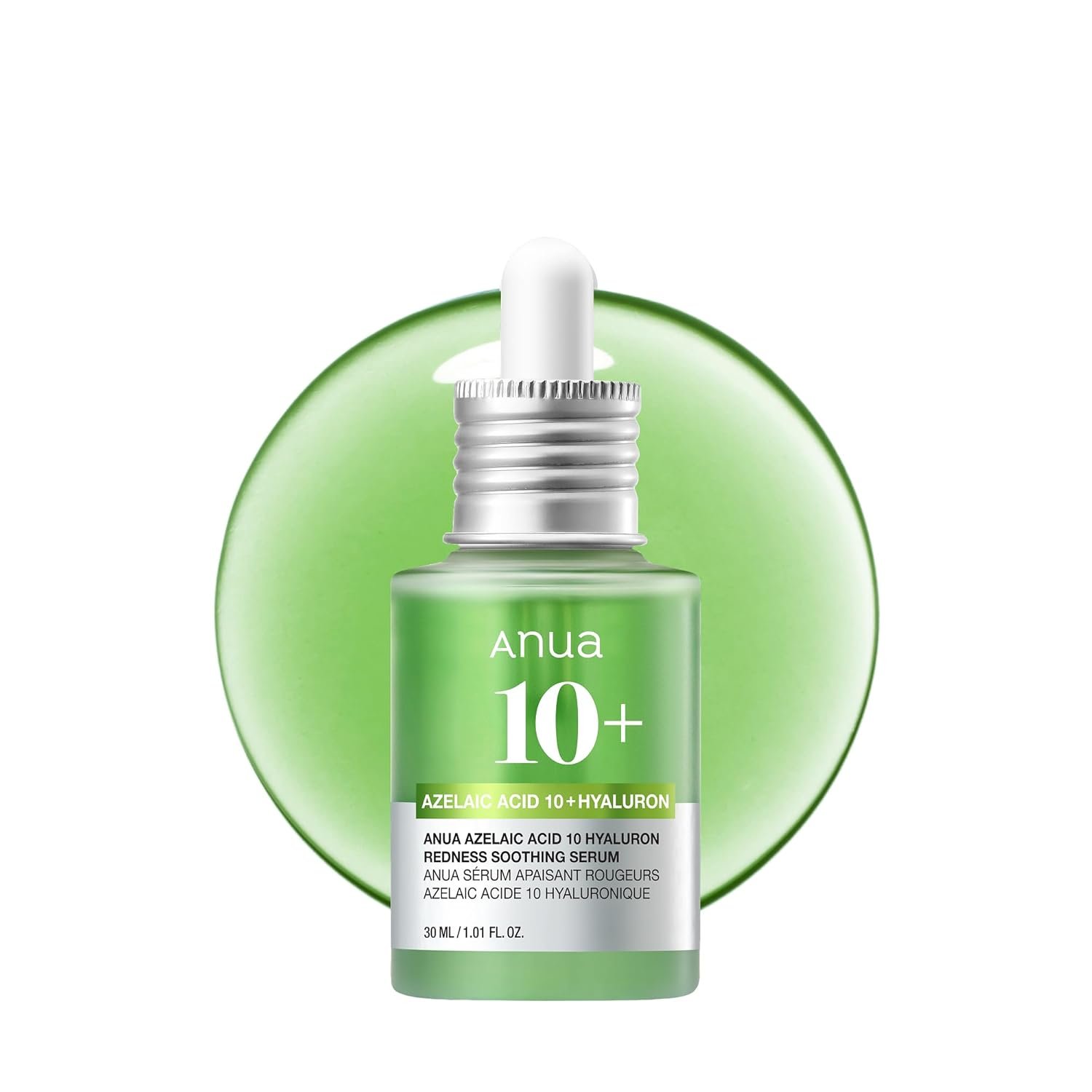
Anua Azelaic Acid 10 Hyaluron Redness Soothing Serum
Quick verdict
- Best for:Oily, blemish-prone, redness-prone skin that needs active care
- Skip if:You expect it to treat rosacea or hormonal acne on its own
- Key ingredient:Azelaic acid 10% + centella
A lightweight serum formulated with 10% azelaic acid, hyaluronic acid, centella, and blue tansy oil to support blemish-prone skin, reduce the appearance of redness, and provide weightless hydration.
Our verdict
What stands out
- 10% Azelaic Acid — Helps improve the appearance of redness, blemishes, uneven tone, and congested-looking skin
- Weightless Hydration — Hyaluronic acid provides moisture without a heavy residue
- Centella Support — Helps soothe stressed or sensitive-feeling skin
- Blue Tansy Oil — Included in the brand's calming complex and contributes to the serum's naturally green tint
- Oil and Blemish Care — Designed to help balance excess sebum and reduce pore congestion
- Non-Comedogenic Testing — Tested for use on acne-prone skin, according to Anua
Key ingredients
- Azelaic Acid 10%
- Hyaluronic Acid
- Centella Asiatica
- Blue Tansy Oil
- Hydrating humectants
How to use
Pros & Cons
Pros
- 10% azelaic acid targets redness, blemishes and uneven tone
- Hyaluronic acid adds weightless hydration
- Centella and blue tansy oil support a calming feel
- Non-comedogenic and low-irritation tested by the brand
Cons
- Some reviewers report burning, stinging or sensitivity
- Claims about rosacea or hormonal acne are individual experiences
- Requires gradual introduction and morning sunscreen
Frequently asked questions
Does the Anua Azelaic Acid serum help rosacea?
Azelaic acid is a known ingredient for redness-prone skin, but this cosmetic serum is not a medical rosacea treatment. Some reviewers report reduced visible redness, but results vary — consult a dermatologist for diagnosed rosacea rather than self-treating.
Can I use azelaic acid with retinol?
They can be used in the same routine by some, but stacking actives raises irritation risk. A safer approach is azelaic acid in the morning and retinol at night, introduced one at a time, with sunscreen during the day.
Is it good for acne?
Azelaic acid is used in blemish-prone routines and the formula is non-comedogenic tested. It may support a clearer-looking complexion over time, but it is not a standalone acne treatment — pair it with an established acne routine if breakouts are your main concern.
Why does it tingle when I apply it?
A brief mild tingling can occur with azelaic acid, especially at 10%. Persistent burning, redness or itching is a reason to stop. Start with once daily or every other day and patch-test first if your skin is sensitive.
Who should buy it
- Your skin is oily, blemish-prone or redness-prone
- You want an active for uneven tone and congestion
- You can commit to daily sunscreen
Who should skip it
- You expect a guaranteed rosacea or hormonal-acne cure
- Your skin is highly reactive to actives
- You already use several strong acids or retinoids
Disclosure: This page contains affiliate links. We may earn a commission from qualifying purchases at no additional cost to you.
Buy on AmazonWe link to Amazon and may earn a commission — at no extra cost to you.
The green color comes from naturally derived ingredients rather than artificial coloring. Anua also states that the formula contains no artificial fragrance. Price and rating information may change. Check Amazon for the latest details.
Featured in our buyer's guides
Ready to try Anua Azelaic Acid 10 Hyaluron Redness Soothing Serum?
Check the current price and availability on Amazon.